My first artist residency at Chateau Orquevaux in Champagne France
I arrived with a plan
On dissolving, attending, and what residencies actually give you
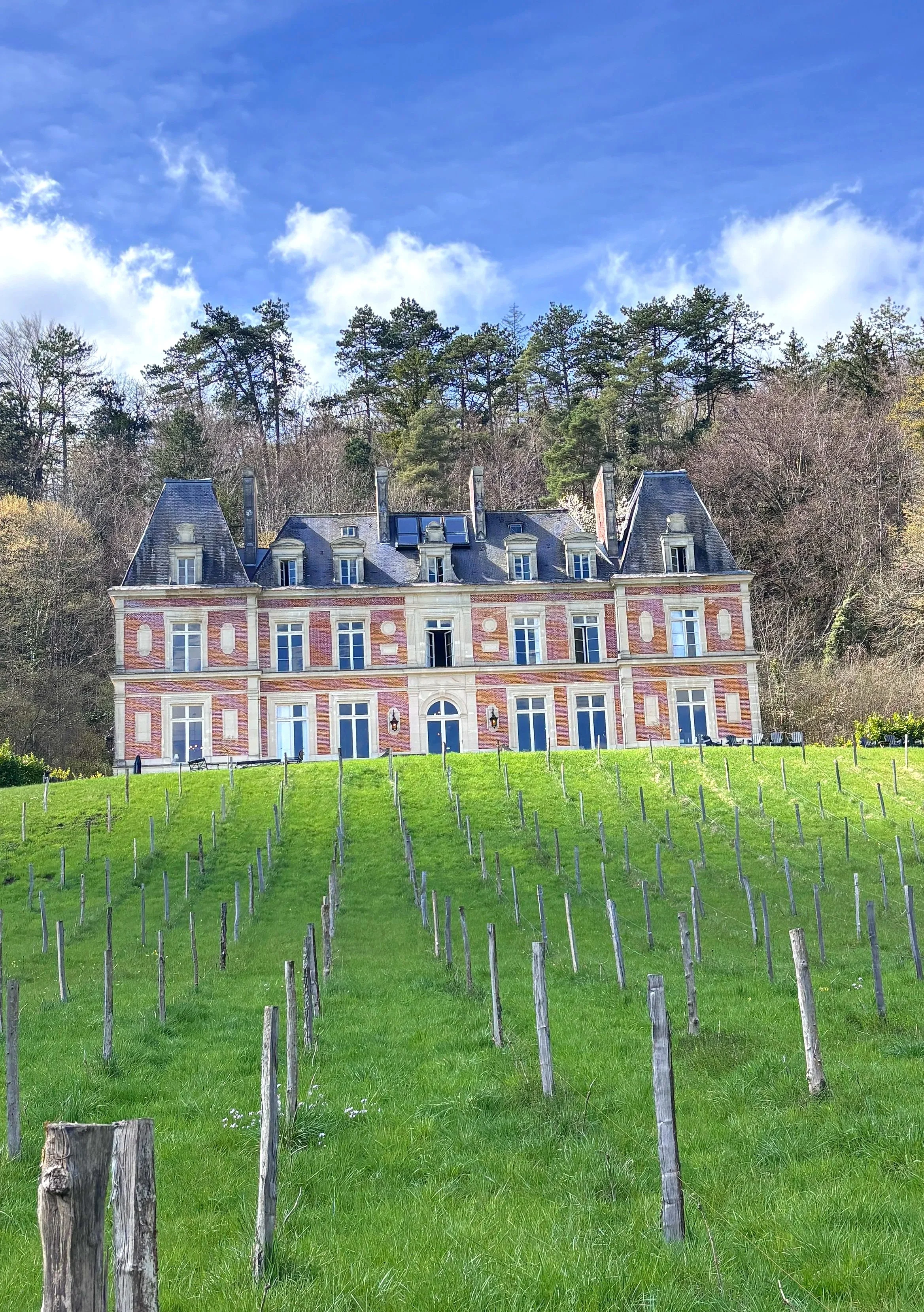
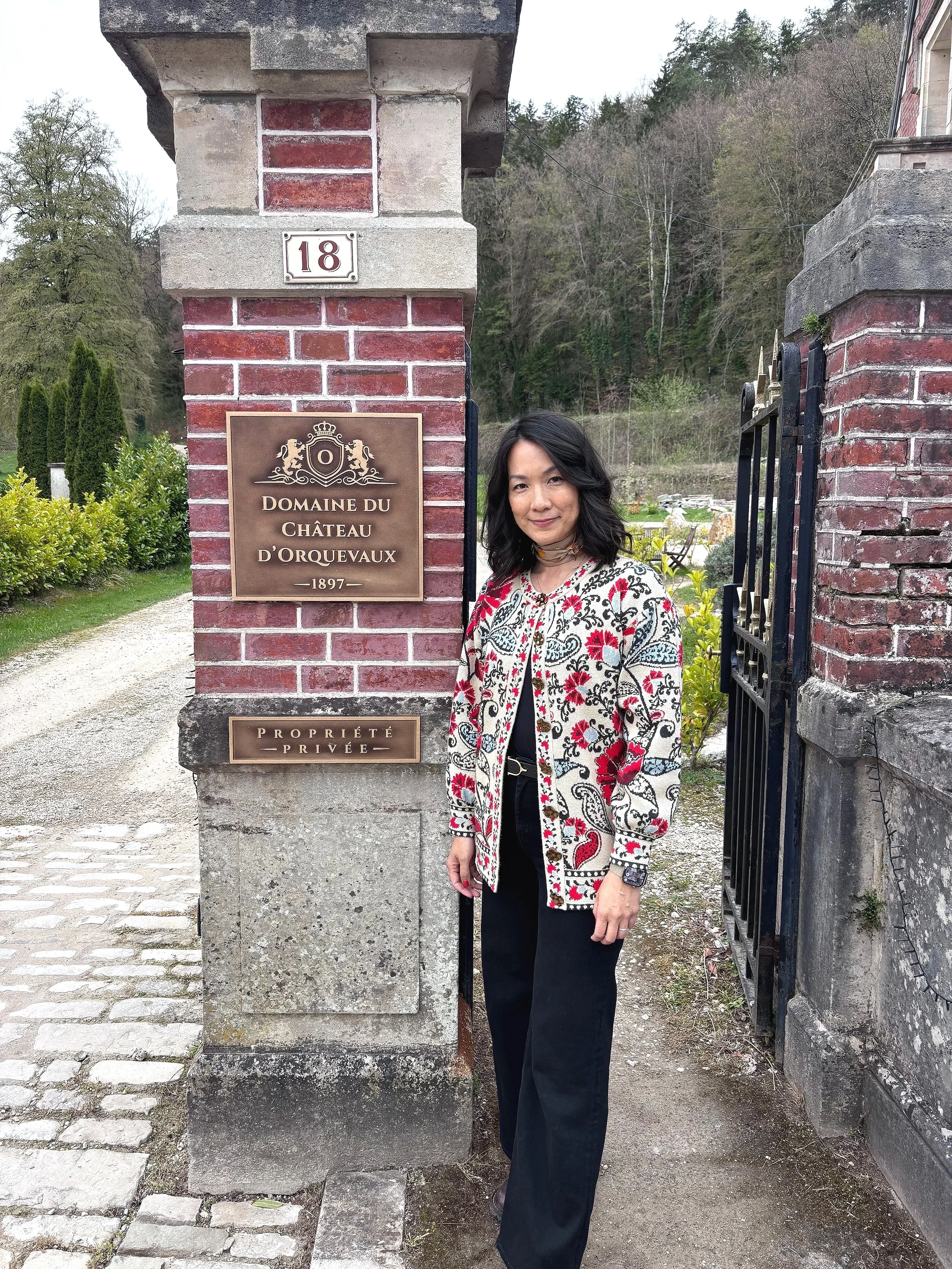
I remember the first sight of Château d'Orquevaux the way you remember the first page of a book you meant to read slowly. Creamy stone. Tiled roofs. A kind of patience in its geometry. We came by train, then by white van down a one-lane road through Champagne-Ardenne - forty acres of fields and woods opening around us as we arrived.
We were met with champagne. Then an orientation. Private studio, private room, meals provided. The point was plain: remove friction, make space.
Of course I had a plan. I always have a plan — my parents taught me to always have plans and contingencies. I had sketches. A loose sequence of ideas. A set of subjects I intended to paint. There's comfort in that kind of structure — the illusion that you know what you're going to make before you've made it. But I was also ready to play. I wasn’t sure how I would do it, but I was excited to be free and less ideas come.
That plan dissolved in about forty-eight hours.
Not dramatically. Not with any great crisis. It just became irrelevant, the way certain anxieties do when the situation you were anxious about turns out to be entirely different from what you imagined.
The rhythm of the place
The château asks: but what do you actually want to look at?
I carved a ritual out of the days. Tea in the morning. Long hours in the studio. Walks to the stables to see what other artists were making. The path moved through grassy meadows into the woods, past a huge swing by the bonfire where we gathered in the evenings.
Dinner without phones — genuinely without phones, present in a way that made time feel slower and more generous. Conversations that began casually and ended somewhere deeper than you planned to go.
Movement does what movement always does: it sharpens perception. Creaking and slight askew wood floors in the chateau. The surprising entrances of the resident orange striped cat Dusty. The soft rhythm of French at dinner. All of it accrued. My mind began to fill with ideas and small pictures.
There were twenty-five artists from all over — Canada, the Philippines, Mexico, the Dominican Republic, the US. Painters, paper artists, fashion designers, filmmakers, writers and poets working in forms I'd never considered. Different countries, different stages of life and career, different ideas about what making things is even for.
What we shared was a willingness to be in process. Not performed process. Not the tidy retrospective version. The actual thing: the uncertainty, the false starts, the discovery that the piece you thought you were making is revealing itself to be something else entirely.
I found that profoundly settling.
“One day became an impromptu figure-drawing session in a high-ceilinged salon. We gathered and noticed one another’s ways. That openness — the permission to try and to fail — was the transformation.”
On not finishing things
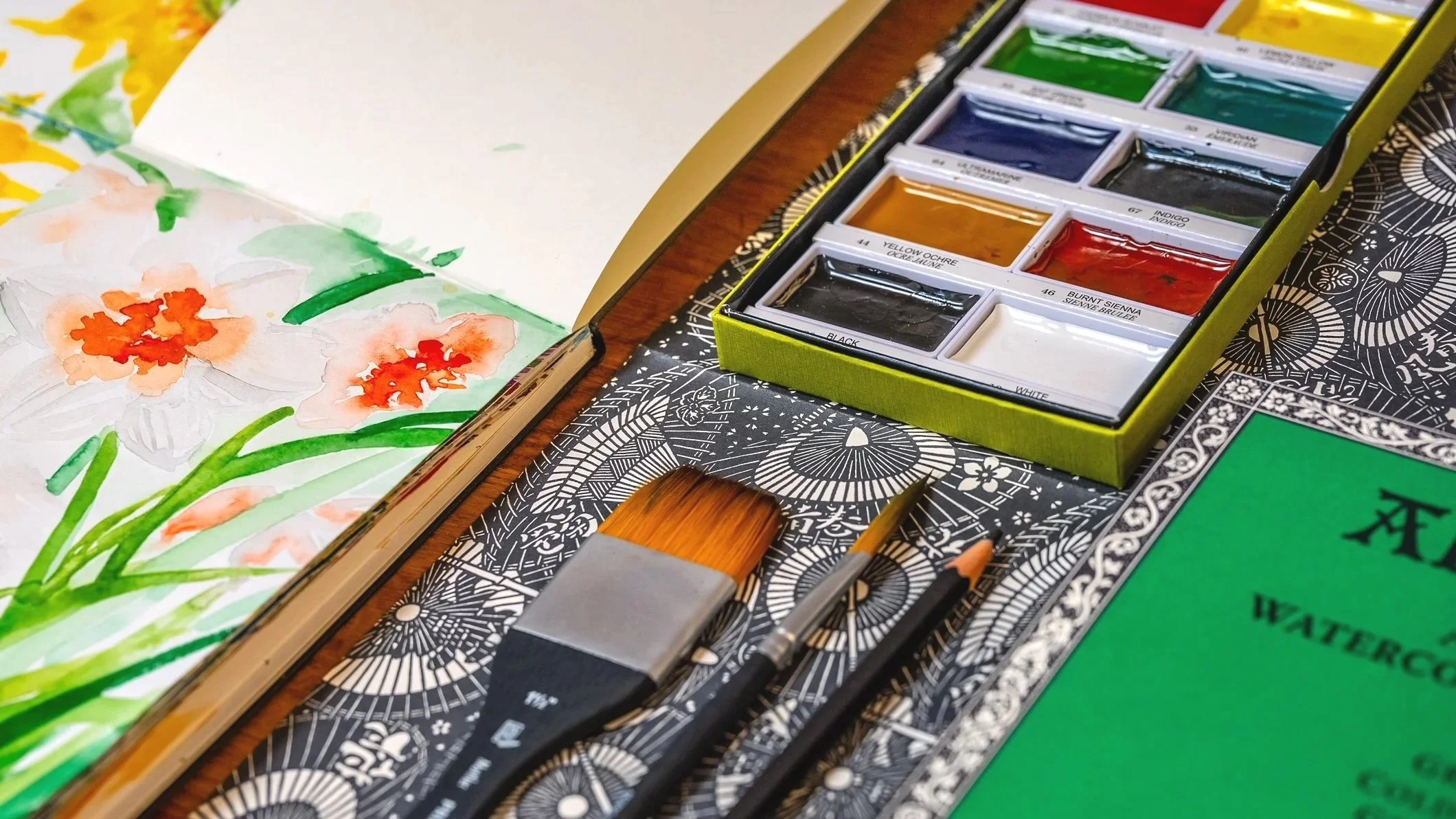
I worked in ways that felt unfamiliar. More instinctive. Less deliberate. I kept arriving at edges I didn't know how to cross — subjects I thought I understood that turned out to be more complex or more resistant than I expected. A flower. A familiar object. A composition I've painted in variations before.
And suddenly: the paper resisted. The color didn't behave. The form refused to resolve into anything I recognized as finished.
So I stopped trying to finish it.
That sounds small. It isn't small.
I started treating each piece as a study. As a question rather than an answer. I let things remain unresolved — not because I gave up on them but because I began to understand that the unresolved state was sometimes the honest one. And I had my wonderful new artist friends to support me along the way. The ‘accept’ and keep going, to even ‘work big’ or to ‘sit with it’. That pushing past it would mean performing a kind of certainty I didn't actually have.
Something in that shift opened everything up.
I made more work in those two weeks than I thought was possible for me. Not because I worked harder, but because I stopped protecting myself from the pieces that felt too uncertain to begin. I began more. I failed more. I learned more from those failures than from anything I've made in the last year.
I went home with fourteen pieces and sketches, and with a quieter trust in how I work.
A word that keeps returning
Awe.
Not the theatrical kind — not the kind that requires a cathedral or a coastline or a particular sunset. Something quieter than that.
The kind that arrives when you're paying close attention to something small and unremarkable: the way afternoon light pools along a windowsill, the extraordinary stillness of the swans on the water that made you stop walking for a full minute without knowing why, the weight of an ordinary object — a lock, a piece of porcelain, a single stem — that seems to hold more meaning than you can account for.
That kind of awe. The ambient kind. The kind that changes the quality of your attention rather than its direction.
I didn't go to Château d'Orquevaux looking for it.
I left with it anyway.
Since returning, I've been gathering what happened there — paintings, small studies, fragments of writing, images that feel like memory even though they're brand new — into something I didn't plan to make.
I’ll share more of my pieces soon, my voice started to emerge even stronger.
Have you ever had a plan dissolve into something better? Or: tell me about a place that changed how you see.